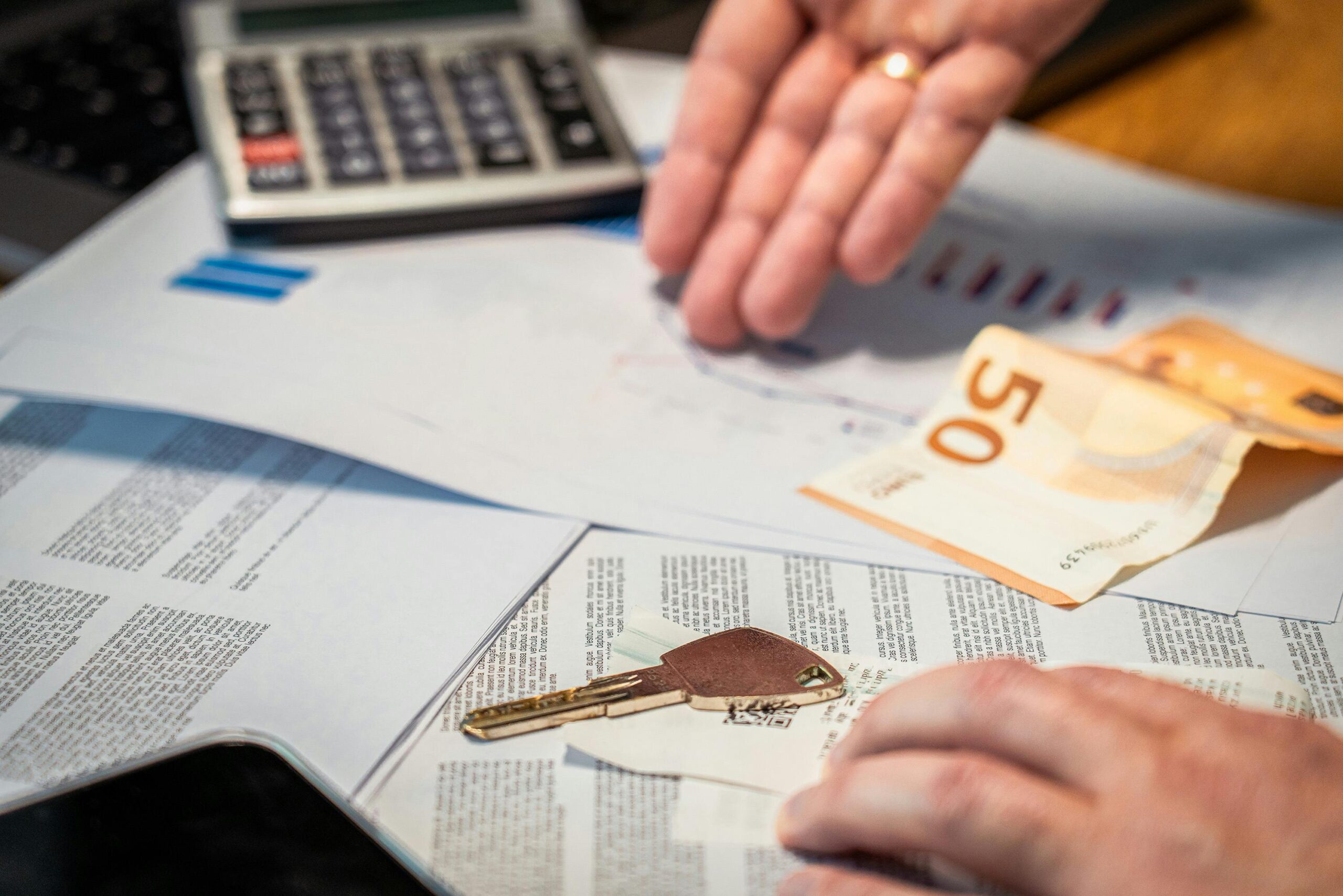
Expat mortgage upfront costs in Amsterdam typically add up to 3 to 6 percent of the purchase price, on top of the deposit you pay after signing the preliminary purchase agreement. That means budgeting for notary fees, a valuation, mortgage advice, and sometimes a National Mortgage Guarantee (NHG) premium, mostly from your own savings rather than the mortgage itself. Get the numbers wrong and you can end up short of cash exactly when the notary is waiting for a bank transfer.
In the Netherlands these one-off purchase costs are known as kosten koper, literally buyer’s costs. They sit on top of the purchase price itself and, in most cases, have to come from your own funds rather than the mortgage, even if you finance 100 percent of the property value.
The main components are the valuation report (taxatie), notary fees for both the transfer deed and the mortgage deed, mortgage advisory fees, an NHG fee if you use the National Mortgage Guarantee, and, if you hire a buyer’s agent (aankoopmakelaar), their fee too. Together these typically run to 3 to 6 percent of the purchase price.
On a property of 450,000 euros, that works out to roughly 13,500 to 27,000 euros in own funds, separate from the deposit discussed below. The exact figure depends on which services you use and whether you buy with an agent.
| Cost item | Tax deductible | Why it applies |
|---|---|---|
| Valuation (taxatie) | Yes | Required by the lender to confirm the property’s value |
| Notary fee, mortgage deed | Yes | Registers the mortgage against the property |
| Notary fee, transfer deed | No | Transfers ownership rather than securing the loan |
| Mortgage advisory fee | Yes | Directly tied to arranging the loan |
| NHG fee (borgtochtprovisie) | Yes | Treated as a loan-related cost |
| Transfer tax (overdrachtsbelasting) | No | A property tax, not a loan or advisory cost |
| Buyer’s agent fee (aankoopmakelaar) | No | Service fee unrelated to the mortgage itself |
Once you sign the preliminary purchase agreement (koopovereenkomst), you are usually asked for a deposit, the waarborgsom, worth 10 percent of the purchase price. On the same 450,000 euro property, that is 45,000 euros.
This is not an extra cost on top of the price. It is a security payment that gets settled against the purchase price at completion, so you effectively pay it early rather than paying more overall. You can cover it with your own savings or with a bank guarantee arranged through the notary, which comes with its own, smaller fee.
Many expats underestimate how quickly this deadline arrives. The waarborgsom is normally due within weeks of signing, well before the mortgage itself is finalised, so it needs to be sitting in an accessible account rather than tied up abroad or invested. Working with advisors who arrange this daily for international clients helps you plan the transfer in good time.
Not every euro you spend before the notary appointment reduces your tax bill. The valuation, the notary fee for the mortgage deed, your mortgage advisory fee, and the NHG fee are all deductible in the year you buy. Transfer tax and any buyer’s agent fee are not, regardless of how the purchase is structured.
You do not have to wait for your annual tax return to see the benefit. You can apply to the Dutch tax authority for a provisional monthly refund (voorlopige teruggaaf), which spreads the deduction across the year instead of arriving as a single lump sum months later.
If you are a fiscal partner buying together, the deductible interest and costs can be split in whichever ratio works best for your combined tax position, including 100 to 0 or 50 to 50. This is worth discussing before you file rather than after.
If your property falls within the National Mortgage Guarantee limit, which rises to 470,000 euros in 2026, or 498,200 euros when you finance energy-saving measures, NHG is usually worth considering. Roughly seven in ten expat purchases now fall within reach of NHG under this raised 2026 limit.
NHG protects you if you can no longer meet your payments due to job loss, disability, or divorce, and it typically comes with a lower interest rate because the lender’s risk is reduced. In exchange, you pay a one-off fee, the borgtochtprovisie, of 0.4 percent of the mortgage amount in 2026.
On a 450,000 euro mortgage, that is 1,800 euros, payable upfront and deductible in your first year, as shown in the table above. It is a real cost, but for many expats the lower rate and residual debt protection outweigh it, especially given how unfamiliar a concept like NHG is if you have never had a Dutch mortgage before.
The most common mistake is budgeting only for the 10 percent waarborgsom and forgetting that another 3 to 6 percent in kosten koper is coming on top of it. On a 450,000 euro purchase, that gap can be 13,500 to 27,000 euros you did not plan for.
Because these costs generally cannot be added to your mortgage, except for the portion tied to energy-saving measures, discovering the shortfall late leaves few good options. You either scramble to move savings from abroad under time pressure, delay completion while you arrange funds, which can take several weeks, or in a worst case risk breaching the terms of your purchase agreement if you cannot complete on time.
The safest approach is to get a full, written cost breakdown before you make an offer, not after it is accepted. If you want that worked out for your specific situation and property, you can request a full cost breakdown before you sign anything.
Expats buying in Amsterdam get a full, itemised picture of their expat mortgage upfront costs before they make an offer, so there are no surprises at the notary.
Clients rate this advice 9.8 out of 10 on Google, based on more than 750 reviews.
Reach out via @dekredieter, visit www.kredieter.nl, or call 020-5753320 to get your own cost breakdown before you bid.
Generally no. Kosten koper such as notary fees, valuation, and advisory costs must be paid from your own funds, since Dutch mortgages finance up to 100 percent of the property value, not the purchase costs on top of it. The exception is costs tied to energy-saving measures, which can push financing up to 106 percent.
No. The 30% ruling increases your net income by making part of your salary tax-free, but lenders generally assess borrowing capacity on your full gross salary. It does not lower notary fees, valuation costs, or your deposit, and in 2026 the ruling remains at 30 percent for those who already held it before 2024.
Aim to have your deposit available within a few weeks of signing the preliminary agreement, since the waarborgsom is typically due shortly after that. The full mortgage application then takes roughly four to six weeks, so your remaining purchase costs should be arranged well before the notary appointment.
Yes, if you meet the same conditions as any other buyer. Buyers aged 18 to 34 purchasing their first owner-occupied home for up to 555,000 euros in 2026 pay 0 percent transfer tax, regardless of nationality, provided they sign the required notarial declaration and have not used the exemption before.