The expat mortgage timeline in the Netherlands typically runs four to six weeks from application to final approval, and up to eight weeks if you’re starting completely from scratch. How fast you actually move depends far more on your paperwork and your income situation than on the fact that you’re an expat. Get your documents in order early and the process runs like any other Dutch mortgage; leave gaps in your file and weeks can slip away fast.
Once your file is complete and submitted to a lender, you’re usually looking at four to six weeks before you have a final approval in hand. If you’re starting from zero, meaning you haven’t done any preparation before finding a property, the full process can stretch to around eight weeks, since the lender still needs time to check your income, the property, and the paperwork behind both.
What surprises a lot of expats is that the borrowing rules themselves aren’t different, or worse, for them. You can finance up to 100 percent of the purchase price in 2026, or up to 106 percent when part of the loan goes toward energy-saving measures, exactly the same as for Dutch nationals. There’s no nationality-based penalty in the maximum loan-to-value ratio, the maximum you can borrow, or the interest rate you’re offered.
Where things do slow down is in verification. Lenders need to confirm your income, your residence status, and sometimes your credit history abroad, and each of those checks can take a little longer for a foreign employment contract than for a standard Dutch payslip. Some lenders also require a minimum period of residence in the Netherlands before they’ll even consider your application, ranging from as little as one month to six months or more depending on the lender, so your choice of lender can shape your starting point before the clock even starts.
One thing that can work in your favour: roughly 70 percent of expat home purchases may qualify for the Nationale Hypotheek Garantie (NHG), a government-backed guarantee that protects you if you can no longer pay due to job loss, disability, or divorce, under the raised 2026 limit of 470,000 euros. NHG-backed loans tend to come with lower interest rates, and lenders often process them along familiar, well-trodden lines.
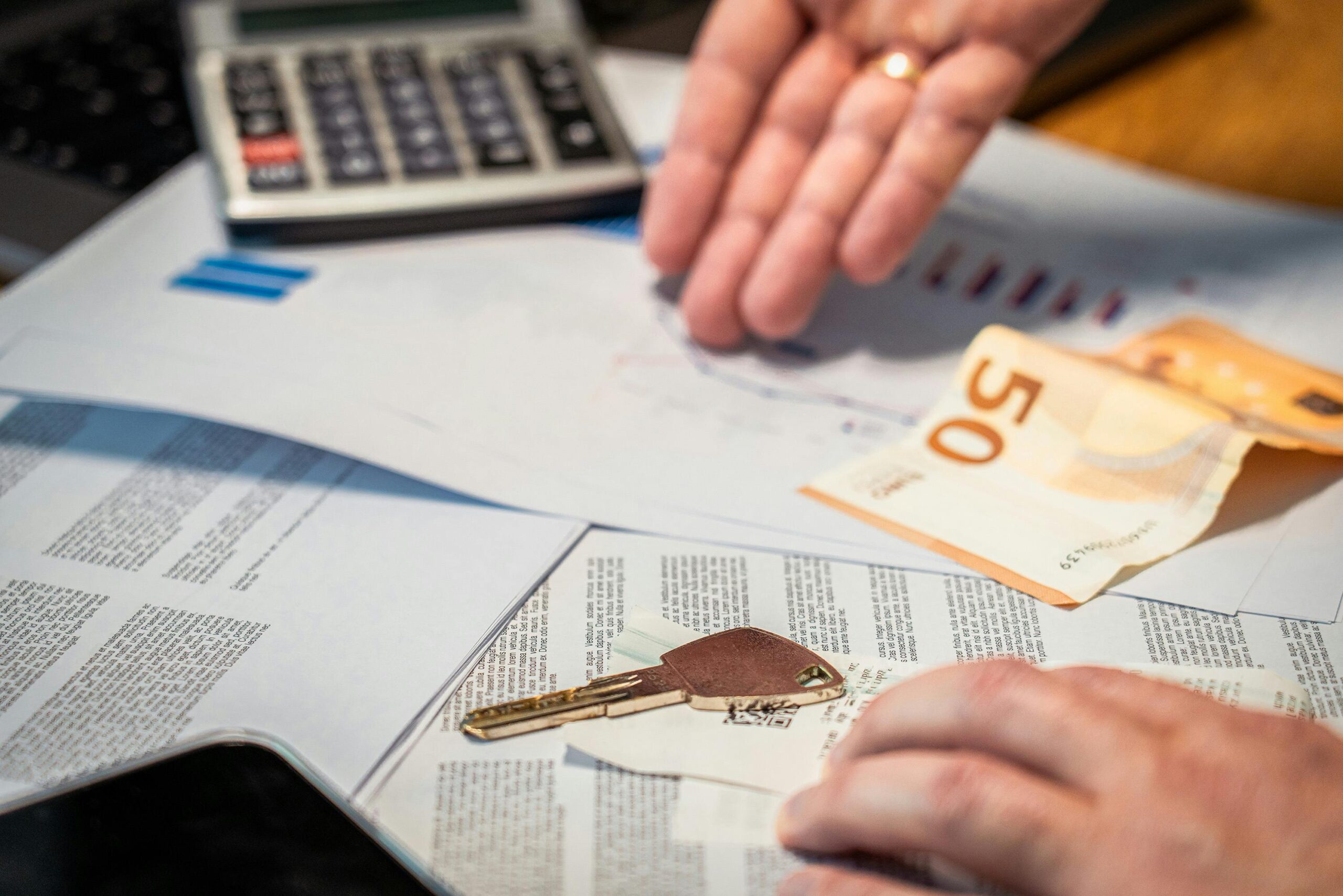
Picture your file sitting on an advisor’s desk with one document missing. That’s usually the moment a four to six week process turns into something longer, and it’s almost always avoidable. The documents below are the ones that come up most often for expat clients, and having them ready before you apply is the single biggest thing you control.
| Document | Why it matters | Note |
|---|---|---|
| Valid passport or ID with BSN proof | Confirms your identity and Dutch tax number (BSN) to the lender | Have a clear copy ready before you apply |
| Employment contract and employer statement | Shows the lender your salary is stable and expat-specific terms are clear | Ask your employer for the expat version if one exists |
| Recent payslips | Confirms your income matches your contract | A longer history helps if your income varies |
| Residence permit or residence document | Proves your right to live and be assessed in the Netherlands | Check your permit’s validity period against your mortgage timeline |
| 30% ruling decision (if applicable) | Lenders want to see the official decision, not just that you mentioned it | Request this early if the decision hasn’t arrived yet |
| Foreign payslips or tax returns (if applicable) | Needed if part of your income or history is from abroad | Translations may be required depending on the lender |
Alongside these documents, you’ll also need own funds ready for the purchase costs (kosten koper), which run at roughly 3 to 6 percent of the purchase price and are paid from your own money rather than the mortgage. Once you sign the preliminary purchase agreement, a deposit (waarborgsom) of around 10 percent is usually required, either from your own savings or through a bank guarantee. Having that money accessible, not just available somewhere, is part of keeping the timeline moving.
The 30% ruling lets qualifying highly skilled migrants receive 30 percent of their salary tax-free for up to five years, and in 2026 that percentage stays at 30 percent. From January 2027, it drops to 27 percent for anyone whose ruling first applied in 2024 or later, while people who already had the ruling before that keep 30 percent for the rest of their term.
Here’s the part that trips people up: most lenders calculate your borrowing capacity based on your full gross salary, as if the whole amount were taxed normally. That means the 30% ruling mostly boosts your net income, what lands in your account each month, rather than the maximum amount you can borrow. So having the ruling doesn’t necessarily speed up or slow down your assessment on its own.
Where it does add a step is documentation. Lenders typically want to see your official ruling decision, not just a mention of it in your contract, and some also stress-test your file against what your income looks like once the ruling ends. If your decision letter hasn’t arrived yet, that’s worth flagging to your advisor immediately rather than waiting until the lender asks for it.
One group this doesn’t apply to at all: self-employed expats working as a sole proprietor (eenmanszaak) can’t use the 30% ruling, since it’s tied to an employment relationship. If that’s your situation, your income assessment follows a different path entirely, and it’s worth having that conversation with your advisor early on.
Say you’ve found a house on a Friday and the seller wants offers by Monday. That’s exactly the scenario an accelerated route is built for. Instead of starting document collection after you’ve already found a property, a complete and verified dossier is assembled and checked before you ever put in a bid, typically within one to five business days.
Once that dossier is ready and a specific property comes into view, a rate offer or conditional quote can be requested from your preferred lender on the same day, because the lender is working from a file that’s already been checked rather than starting cold. The advisor on the team can then turn that into a concrete bidding recommendation, including how much room you have for overbidding and purchase costs.
What this route doesn’t do is skip the notarial process afterward. Once your bid is accepted, the definitive approval and completion at the notary still follow the standard four to six week market timeline. The real time saved sits earlier, before you bid, not after.
For expats specifically, this route needs the same expat-specific documents mentioned above (employer statement, residence document, 30% ruling decision, foreign payslips where relevant) fully in place first. Skipping that step defeats the purpose, since a fast quote based on an incomplete file isn’t one you can actually rely on when you’re standing in front of a seller.
Take a 500,000 euro property as an example. If you bid without a financing contingency (financieringsvoorbehoud), the clause that lets you walk away penalty-free if financing falls through, and your mortgage then doesn’t come together because a document was missing, the seller can typically claim a contractual penalty of around 10 percent of the purchase price. On that example property, that’s roughly 50,000 euros, on top of losing the house.
Even without bidding blind, an incomplete dossier is one of the most common reasons an expat mortgage stalls partway through. A missing 30% ruling decision, an outdated employer statement, or payslips that don’t quite match the contract can each add avoidable weeks to what should be a four to six week process, sometimes pushing a straightforward file into the eight week range or beyond.
The safest approach for anyone with a foreign income structure, a temporary contract, or allowances layered on top of a base salary is to have the file checked before you’re under time pressure to bid. If you want a second pair of eyes on your file, get in touch before you make an offer rather than after.
Most expat mortgage timelines run four to six weeks from a complete application to final approval, or up to eight weeks if you start without any preparation.
No. You don’t need Dutch citizenship or a permanent residence permit; the borrowing rules for expats are the same as for Dutch nationals, up to 100 percent of the purchase price in 2026 (106 percent with energy-saving measures).
Not directly. Most lenders base your maximum mortgage on your gross salary rather than the tax-free portion, but they will want your official ruling decision on file, so requesting it early helps avoid delays.
Fastlane gets your dossier fully assembled and verified before you bid on a property, so a rate offer can often be arranged on the same day you find a home, rather than starting the paperwork after your offer is accepted.
If you want your file checked before you start viewing properties, reach out via @dekredieter, visit www.kredieter.nl, or call 020-5753320.